In industrial bonding technologies, two-component (2K) systems are indispensable solutions for critical applications due to their superior mechanical strength, chemical resistance, and curing control compared to their single-component counterparts. The “water resistance” and “rubber” parameters specified in the user query necessitate a deep understanding of polymer chemistry in adhesive selection.
1.1 Chemistry and Curing Mechanism of Two-Component Systems
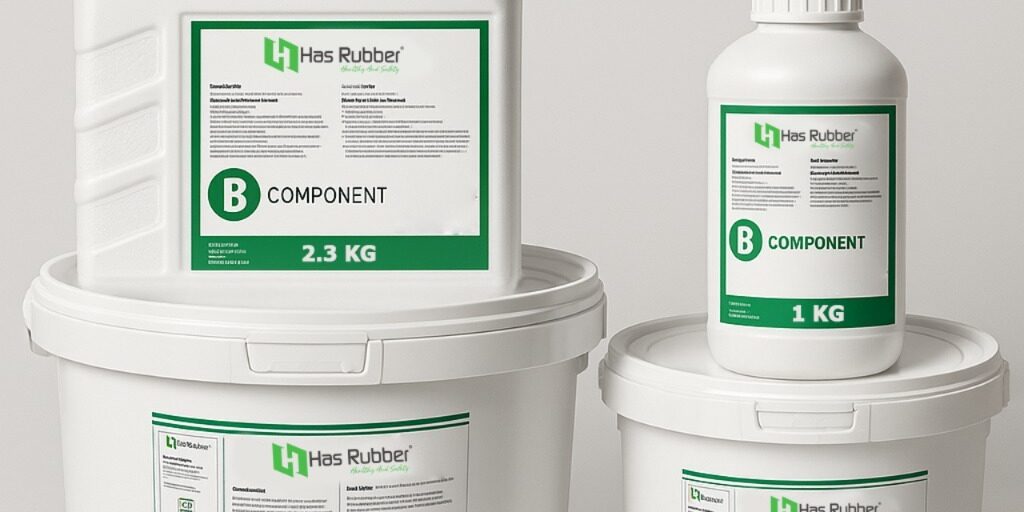
Two-component adhesives rely on a stoichiometric chemical reaction between a resin (Component A) and a hardener/activator (Component B). This reaction creates a three-dimensional cross-linking network between polymer chains, giving the adhesive a thermoset character. This network physically prevents water molecules from penetrating the polymer matrix, thereby providing hydrolytic stability.
In the Turkish market, two main chemical families stand out specifically for rubber bonding:
-
Polyurethane (PU) Systems: Generally formed by the reaction of a polyol (resin) and an isocyanate (hardener – usually an MDI derivative). As seen in products from brands like Beefloor and Polymex, these systems are known for their flexibility. In bonding elastic materials like rubber, it is critical for the adhesive to stretch along with the substrate and absorb stress (modulus matching). PU systems can have an elongation at break between 150% and 400% depending on their formulation, making them ideal for floor coverings.
-
Polychloroprene (CR) Based Cold Vulcanization Systems: Found in technologies like Rema Tip Top SC 4000 and Derby conveyor adhesives, this principle relies on the reaction of polychloroprene rubber dissolved in solvent with an isocyanate-based hardener. These systems provide a molecular-level bond through a chemical “fusion” (cold vulcanization) rather than simple “sticking” between rubber-to-rubber or rubber-to-metal. This bond is more resistant to the destructive effects of water and dynamic loads (vibration, impact) than polyurethane.
1.2 Water Resistance and Hydrolytic Stability
From an engineering perspective, the term “water resistance” covers two different phenomena:
-
Barrier Property: The adhesive’s ability to be waterproof. Most 2K systems are impermeable to water once cured.
-
Hydrolysis Resistance: The adhesive’s ability to avoid chemical degradation when in contact with water. Polyester-based polyurethanes can undergo hydrolysis (chain scission) in hot and humid environments, losing mechanical properties and entering a softening process called “reversion.” Therefore, in outdoor (playground) or maritime applications, the choice of polyether-based polyurethanes or hydrophobic polychloroprene systems is vital.
1.3 Challenges in Bonding Rubber Surfaces
Rubber (SBR, EPDM, Neoprene) is one of the most difficult materials to bond. The primary reasons are:
-
Low Surface Energy: Makes it difficult for the adhesive to spread (wetting) on the surface.
-
Additive Migration: Plasticizers, mold release agents, and anti-ozonants in the rubber formulation migrate to the surface over time, creating a weak boundary layer between the adhesive and the rubber. This can cause the bond line to fail spontaneously over time.
Therefore, successful application is possible not only by choosing the right adhesive (2K) but also through proper surface preparation (sanding, solvent wiping, priming).
2. Main Product Segments and Technical Comparisons in the Turkish Market
The two-component rubber adhesive market in Turkey is strictly divided according to application areas. An adhesive used in a gym floor is entirely different from one used for belt splicing in a mine in terms of chemical and cost structure.
2.1 Industrial Flooring and Sports Fields (Polyurethane Dominance)
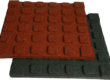
This segment is the largest in the market by volume. It involves bonding rubber tiles (SBR) or EPDM rolls to concrete or asphalt surfaces.
2.1.1 Beefloor PU 218 (Tuşba Zemin)
The Beefloor series, brought to market by Tuşba Zemin Market, stands out with its domestic production power and cost-effectiveness.
-
Product Structure: Two-component, solvent-free polyurethane.
-
Packaging: Usually sold in 25 kg sets (A+B). This large packaging is optimized for high-meterage projects (gyms).
-
Pot Life: According to technical data, the mixture must be consumed within 20-30 minutes. However, in Turkey’s hot climate conditions (e.g., a construction site in summer), it should be noted that this period can drop to 10-15 minutes due to the exothermic nature of the isocyanate reaction.
-
Water Resistance: Specified as “Yes” with a “High” level of waterproofing. This indicates resistance to outdoor weather conditions (rain, snow) after curing.
2.1.2 Polymex P-3025 and Industrial Solutions
Polymex Kimya offers products for more technical and specific industrial needs. The TDS (Technical Data Sheet) for P-3025 includes critical engineering details:
-
Hardness (Shore D): 80-90 Shore D. This value shows the product reaches a very hard (almost rigid plastic) structure when cured. While this might be too stiff for standard flexible rubber floors, it is excellent for rigid requirements like industrial filter production or fixing rubber to metal.
-
Heat Resistance: The P-3018 variant offers a wide range from -40°C to +280°C, proving it unrivaled for rubber gasket bonding in automotive engine compartments or high-temperature industrial processes.
2.2 Heavy Industry and Conveyor Belt Systems (Polychloroprene Dominance)
Mining, cement plants, and power plants depend on conveyor belts. Adhesives used here must not only be waterproof but also resist dynamic fatigue under tons of load.
2.2.1 Rema Tip Top SC 4000
The undisputed global leader in this segment is the German firm Rema Tip Top, which has an extensive distributor network in Turkey.
-
Technology: Two-component, solvent-based (CFC-free) polychloroprene adhesive.
-
Application: Rubber-to-Rubber, Rubber-to-Metal, Rubber-to-Fabric. Specifically used for cold splicing of conveyor belts and pulley lagging.
-
Mixture Ratio: Mixed with 4% hardener (E-40 or ER-42). This precise ratio necessitates the use of digital scales.
-
Critical Note: Extremely sensitive to moisture during application. The surface temperature must be at least +3°C above the dew point; otherwise, an invisible moisture layer forms, and bonding fails.
3. Technical Depth: Product Specifications and Engineering Data
| Feature | Beefloor PU 218 | Polymex P-3025 | Rema Tip Top SC 4000 | SikaForce 2K PU |
| Chemical Base | Polyurethane (Solvent-free) | Polyurethane (Industrial) | Polychloroprene (Solvent-based) | Polyurethane (Structural) |
| Component Ratio | Set (Inside bucket) | 4:1 or 5:1 by weight | 4% by weight (Hardener) | Variable (Machine dosage) |
| Viscosity | Medium (Trowelable) | A: 5000 mPas / B: 250 mPas | Low (Brushable) | Thixotropic / Pasty |
| Pot Life (20°C) | 20-30 Minutes | 30-45 Minutes | ~2 Hours (After mixing) | Adjustable by speed |
| Final Hardness | Flexible (Floor compatible) | 80-90 Shore D (Very Hard) | Flexible (Rubber matched) | Structural (High Modulus) |
| Water Resistance | High (Outdoor) | Excellent (Chemically resistant) | Excellent (Immersion type) | High (Maritime approval) |
4. Application Engineering: Critical Steps for Success
The performance of 2K waterproof adhesives depends 20% on product quality and 80% on application technique.
-
Moisture Barrier: In applications on concrete, if the moisture level is above 4%, the isocyanate reacts with water to produce $CO_2$ gas, causing foaming, reduced strength, and surface irregularities.
-
Surface Preparation: For metal, surfaces should be sandblasted to SA 2.5 standard and primed immediately. Rubber surfaces must be buffed to remove the oxidized layer and increase the surface area.
-
Mixing Procedure: Use a low-speed mixer (300-400 rpm) for at least 3 minutes. High speed traps air bubbles, weakening water impermeability.
5. Market Analysis and Costing
Access to these products in Turkey aligns with industrial zones. Kocaeli (Kartepe/Gebze) and Istanbul are the primary supply hubs.
5.1 Price Analysis (Estimated 2024-2025)
| Product Type | Representative Product | Approx. Price | Usage Area |
| Flooring PU | Beefloor (25 kg Set) | ~3,780 TL | Gyms, large areas |
| Conveyor Type | Rema SC 4000 (700g) | ~2,970 TL | Critical belt splices, mines |
| Local Conveyor | Derby / Equivalent | 600 – 1,000 TL | Belt repair, general rubber |
| Fast Repair | Pattex 2K (200ml) | 150 – 250 TL | Small part assembly |
Insight: Using Rema SC 4000 for flooring is “economic suicide” (28x more expensive per kg). Conversely, splicing a mining belt with Beefloor flooring adhesive is a “technical disaster” (failure).
6. Health, Safety, and Regulations
-
Isocyanate Risk: Both PU hardeners (MDI) and Rema hardeners can cause respiratory sensitization. Use of proper PPE (A2P3 filtered masks, nitrile gloves) is mandatory.
-
VOC Emissions: Solvent-based adhesives (Rema, Derby) contain Volatile Organic Compounds. For indoor applications like gyms, solvent-free PU systems (Beefloor) are the only legal and safe option.
7. Conclusion and Recommendations
The request for “Two-Component Waterproof Rubber Adhesive” cannot be met by a single product; selection must be specific to the application:
-
For Large Area Flooring: Solvent-free PU systems like Beefloor PU 218 should be preferred.
-
For Industrial Belts and Rubber-to-Metal: Rema Tip Top SC 4000 or technical Derby series must be used for chemical fusion (cold vulcanization).
-
For Quick Repairs: Cyanoacrylate-based Pattex 2K sets are ideal for small parts (gaskets, trims), but they have limited structural load capacity.
Users must review TDS documents, adhere to mixing ratios, and follow manufacturer instructions regarding Turkey’s variable humidity and temperature conditions to ensure long-lasting bonding performance.